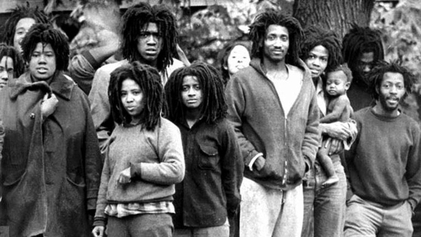

A black liberation group that advocated a return to a hunter-gatherer society, but members were bombed by Philadelphia police.
Founder: John Africa (born Vincent Leaphart)
Founded: 1972
Location: Philadelphia, Pennsylvania, United States
Other Names: The MOVE Organization
MOVE, originally named the Christian Movement for Life, was founded in 1972 in Philadelphia, Pennsylvania, by John Africa, born Vincent Leaphart. This communal organization, not defined by an acronym despite its all-capital spelling, propagated a way of life in alignment with nature’s laws, advocating for natural living and anarcho-primitivism. MOVE combined revolutionary ideology, akin to the Black Panthers, with animal rights work, wearing their hair in dreadlocks and living in communal settings primarily in West Philadelphia. They are renowned for their stance against science, medicine, and technology, pushing for a return to a hunter-gatherer society while emphasizing the sanctity of all living beings, from humans to animals.
John Africa’s vision for MOVE was encapsulated in a document known as “The Guidelines,” emphasizing self-reliance, a return to natural living, and a critique of modern societal structures. The organization’s ethos was deeply rooted in a belief in life’s sanctity, advocating justice for all living beings beyond institutional confines. This vision drew followers who adopted the surname Africa to honor their perceived mother continent and to signify unity with the group’s cause.
MOVE received national attention as for it’s confrontations with law enforcement, particularly the Philadelphia Police Department, marked by two highly publicized and tragic incidents that underscored the group’s contentious relationship with the city’s authorities. The first major confrontation occurred on August 8, 1978, in the Powelton Village neighborhood of Philadelphia. This incident was the result of a long-standing conflict between MOVE and local authorities, exacerbated by complaints from neighbors about health hazards, noise, and the group’s refusal to comply with city ordinances. The situation reached a boiling point when police arrived to enforce a court order for the group to vacate their compound. The standoff quickly escalated into a violent shootout that resulted in the death of Officer James J. Ramp and injuries to numerous individuals, including police officers, firefighters, MOVE members, and bystanders. The intense gunfire exchange and the resulting fatality led to the arrest and subsequent conviction of nine MOVE members, known as the MOVE Nine, on charges of third-degree murder, conspiracy, and multiple counts of attempted murder. These convictions sparked a significant controversy and debate over police brutality, the use of excessive force, and the fairness of the legal proceedings against the MOVE members.
A second confrontation in 1985 further deepened the rift between MOVE and the city authorities, showcasing an unprecedented level of force used by the police against a domestic group. On May 13, 1985, after a lengthy standoff at their new compound on Osage Avenue, where MOVE had relocated following the 1978 incident, the Philadelphia Police, under orders from the city’s mayor, decided to forcibly remove the group. In an attempt to dislodge a fortified bunker on the roof of the compound, a police helicopter dropped two bombs made of C4 explosive onto the house. The resulting explosion ignited a fire that rapidly spread, leading to the catastrophic destruction of over 60 homes in the predominantly African American neighborhood and the deaths of 11 MOVE members, including five children. The decision to use a bomb in a residential area, the lack of an effective plan to control the fire, and the preventable loss of life drew national outrage, leading to lasting accusations of gross negligence and misconduct against the city’s officials and the police department. The MOVE bombing remains one of the most controversial and tragic events in the history of American law enforcement, raising profound questions about the appropriate use of force, the militarization of police, and the rights of groups and individuals in conflict with the state.
In the aftermath of these events, the MOVE organization and its confrontations with law enforcement have been the subject of numerous legal and civil rights debates, documentaries, and scholarly analyses. The incidents have become emblematic of the broader struggles over racial justice, police accountability, and the limits of governmental power in the United States. The legacy of MOVE’s confrontations with the Philadelphia Police continues to resonate, serving as a cautionary tale about the consequences of escalation and the importance of dialogue and understanding in addressing societal conflicts.
image via Wikimedia Commons