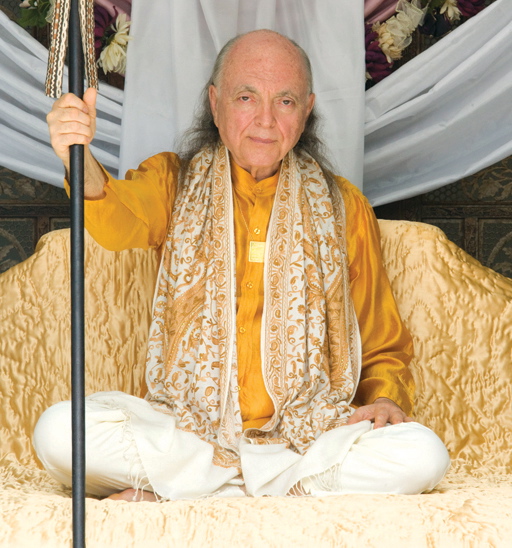
A new religious movement founded by Adi Da Samraj, known for its emphasis on spiritual enlightenment and a controversial history.
Religion: New Age
Founder: Adi Da (formerly known as Franklin Albert Jones)
Founded: 1972
Location: Worldwide (originally established in California, United States)
Other Names: Shree Hridayam Satsang, The Dawn Horse Communion, The Free Primitive Church of Divine Communion, The Crazy Wisdom Fellowship, The Johannine Daist Communion, The Advaitayana Buddhist Communion, The Free Daist Communion
Website: adidam.org
What Is Adidam?
Adidam is a small but distinctive new religious movement that emerged in the United States in the early 1970s. Grounded in a blend of Eastern and Western spiritual philosophy, it is centred on the figure of Adi Da Samraj — a spiritual teacher who claimed to be the living incarnation of divine consciousness itself. Known also as the “Reality-Way of Adidam,” the movement presents itself not merely as a religion but as an all-encompassing way of life rooted in devotion to its founder.
Origins and Founder: Franklin Jones / Adi Da Samraj
Early Life
Adidam traces its roots entirely to one man: Franklin Albert Jones, born in 1939 in Queens, New York, and raised on Long Island in a middle-class, Lutheran household — one in which he served as an acolyte and aspired to become a minister. His early spiritual journey was eclectic and restless. He studied philosophy at Columbia University, graduating with a bachelor’s degree in 1961, before going on to earn a master’s degree in English literature at Stanford University in 1963. After graduating from Stanford, he participated as a paid subject in Veterans Administration drug trials involving LSD, mescaline, and psilocybin. He then pursued theological studies at Lutheran Theological Seminary in Philadelphia and later at Saint Vladimir’s Russian Orthodox Seminary in New York.
In 1968, Jones travelled to India for a brief four-day visit to the ashram of the Hindu guru Swami Muktananda. He returned the following year for a second, month-long visit, during which Muktananda formally gave him the spiritual name Dhyanananda. He was also briefly involved with the Church of Scientology, and in 1970, after experiencing visions of the Virgin Mary during a third trip to India, he undertook a two-week pilgrimage to Christian holy sites across Europe and the Middle East.
Founding of the Movement
In 1972, Franklin Jones opened his first bookstore-center on Melrose Avenue in Los Angeles, California, under the name Shree Hridayam Satsang. This became the starting point for the community that would later develop into Adidam. The early fellowship was later also known as Shree Hridayam Siddhashram, before taking on further names in the 1970s and beyond, including the Dawn Horse Communion. Over the following two decades, the movement underwent further name changes — including the Free Communion Church, the Laughing Man Institute, the Way of Divine Ignorance, and the Johannine Daist Communion — reflecting both an evolving doctrine and a growing community.
Jones himself adopted several names throughout his life. In 1973, following a final visit to Swami Muktananda’s ashram in India and a break with his former teacher, he took the name “Bubba Free John.” Then in 1979, he changed his name to “Da Free John,” and after further transitions, he settled in 1994 on Adi Da — a Sanskrit name meaning “One Who Gives from the Divine Source.” The movement’s final name, Adidam, was revealed in 1996, combining his name with the letter m, evoking both the English phrase I Am and the sacred Sanskrit syllable Om.
In 1983, Adi Da relocated to Naitauba, a private island in Fiji, where he established a primary hermitage and spent much of the rest of his life. He died there in November 2008, having declared that his teaching was complete and that there would be no successor.
Core Beliefs and Theology
Adi Da as Avatar
The defining theological claim of Adidam is that Adi Da Samraj was not merely a spiritual teacher or an enlightened master, but the Avataric Incarnation of the “Bright” — a term he used to describe Conscious Light itself, the ultimate divine reality underlying all existence. In Sanskrit, avatar means “one who has crossed down,” signifying a direct descent of the divine into human form.
Adi Da taught that he was born in a state of perfect spiritual freedom and awareness, but voluntarily relinquished that state at the age of two in order to experience human existence fully — and then to reclaim that awareness, as a demonstration available to others.
Radical Non-Dualism
Adidam’s philosophical foundation is a form of radical non-dualism: the conviction that there is only one reality, which is divine, and that all apparent distinctions — between self and other, individual and God — are ultimately illusory. This is encapsulated in three “great sayings” that became central to the teaching:
- There is no ultimate difference between the individual and the Divine.
- There is only the Divine.
- Everything that exists is a modification of the One Divine Reality.
Adi Da described this ultimate Reality as “always already the case” — not something to be sought or achieved, but something to be recognised through the dissolution of the illusion of a separate self.
The Seven Stages of Life
One of the most systematic elements of Adi Da’s teaching is the Seven Stages of Life, a developmental map of human spiritual evolution. These stages range from basic physical and emotional development in early life through progressive stages of psychic, mystical, and transcendental awakening, culminating in what he called seventh-stage divine enlightenment — a state he claimed to embody uniquely and completely.
Divine Communion
At the heart of Adidam is the concept of Divine Communion: a living, devotional relationship with Adi Da that his followers believe can transmit spiritual awakening directly. Even after his physical death, Adidam teaches that this relationship continues through his eternal spiritual presence and through the structures, texts, and communities he established during his lifetime.
Spiritual Practices
Practice in Adidam is structured around three core facets: radical devotion, right life, and Perfect Knowledge.
Daily Devotional Life
Practitioners engage in a range of daily spiritual disciplines that include:
- Meditation — seated practice oriented toward awareness of Adi Da’s divine presence
- Sacramental worship (puja) — ritual devotional activities involving chanting, prayer, and offerings
- Study — deep engagement with Adi Da’s extensive written teachings
- Darshan — the experience of being in Adi Da’s spiritual presence, whether physically (during his lifetime) or through images, recordings, and sacred spaces
Right-Life Disciplines
Beyond formal spiritual practice, Adidam prescribes specific guidelines for daily living. These include:
- Diet: A generally raw vegan diet is encouraged as a discipline supporting spiritual clarity
- Physical exercise: Conscious movement and exercise as part of an integrated bodily awareness
- Sexual conduct: Specific guidelines govern intimate relationships; most practitioners are in long-term partnerships, though a small number choose celibacy as a form of concentrated spiritual focus
- Retreats: Periodic contemplative retreats, often at one of Adidam’s sanctuaries worldwide
Levels of Participation
Adidam includes several formal levels of practice to accommodate varying degrees of commitment. A small number of devotees live full-time at Adidam hermitages or sanctuaries and practice at an intensive level, while the majority of practitioners live ordinary lives in the broader world, integrating their disciplines into everyday existence. Tithing is expected, ranging from 5 to 15 percent of income depending on one’s level of participation.
Texts and Teachings
Adi Da was extraordinarily prolific. Over the course of his lifetime, he produced more than 75 books spanning theology, philosophy, psychology, and art. His first major work, The Knee of Listening (1972), presented his autobiography and early spiritual realisations. Later works such as The Aletheon and Not-Two Is Peace — the latter addressing global political and humanitarian concerns — extended his thought into broader cultural and geopolitical domains.
He also founded the Dawn Horse Press to publish his writings, and in the final years of his life devoted much of his time to digital art and visual work that was exhibited internationally.
Controversies
Allegations Against Adi Da
In 1985, former followers made public allegations of misconduct against Adi Da, resulting in two lawsuits and extensive media coverage in San Francisco and the broader Bay Area. These allegations included claims of sexual manipulation and authoritarian control over followers’ personal lives. One attorney for Adidam acknowledged that some of the sexual practices described by former members did occur during the 1970s but stated they had been discontinued. Critics have also accused Adi Da of editing and rewriting his earlier books to construct a more hagiographic narrative of his spiritual journey.
University of Southern California religion professor Robert Ellwood wrote that accounts of life in Adi Da’s close-knit community described extremes of both strict asceticism and indulgence, of authoritarianism alongside a rejection of conventional moral norms — practices that followers rationalised as unconventional teaching methods aimed at breaking the ego.
Cult Allegations
Adidam has been described by some as a cult, a label the organisation itself disputes. In response, Adidam has stated that it does not use brainwashing techniques, does not prevent members from leaving, does not pressure people to join, and encourages critical thinking and compassion. The movement distinguishes itself from groups that are financially exploitative or psychologically coercive, pointing to its structured tithing system and its allowance of varied levels of engagement.
Adidam After Adi Da’s Death
Adi Da died on November 27, 2008, at his hermitage in Fiji. Before his passing, he declared that his teaching was complete and that he would have no successor, nor would there be any further Adidam revelations.
The movement has since experienced a decline in membership, and is currently estimated to have approximately 1,000 active practitioners worldwide. Despite its small size, Adidam continues to maintain communities and sanctuaries, publish and preserve Adi Da’s writings, and offer pathways for new practitioners to engage with his teachings. The organisation remains active online through its official website, adidam.org.
Scholarly Assessment
Adidam has drawn attention from academics in the field of new religious movements. The Oxford Handbook of New Religious Movements noted that while Adi Da acknowledged debts to Advaita Vedanta and Buddhism, he consistently asserted the originality of his own religious teaching. Scholars have compared Adidam to the Hindu tradition of bhakti yoga (devotional worship), while also noting its distinctly syncretic and Western character.
Jeffrey J. Kripal, J. Newton Rayzor Chair in Philosophy and Religious Thought at Rice University, has acknowledged the intellectual seriousness of Adi Da’s work, while other scholars have approached it with greater caution given the controversies surrounding his personal conduct.
Conclusion
Adidam occupies a genuinely unusual position in the landscape of new religious movements: intellectually ambitious, spiritually comprehensive, and deeply controversial. It emerged from one individual’s extraordinary and unconventional spiritual journey, built itself around a radical theological claim — that Adi Da Samraj was the literal incarnation of divine reality — and developed a detailed, demanding practice for those willing to follow it.
Today, Adidam endures as a small but committed community dedicated to preserving and practising the teachings of its late founder. Whether viewed as a legitimate spiritual path, a problematic personality cult, or an object of genuine scholarly interest, it remains one of the more distinctive and thought-provoking religious experiments of the twentieth century.
Sources
- “Names of Adidam.” Adidam.org. adidam.org/adida/religion/adidam.htm
- Melton, J. Gordon. “Adidam.” Encyclopædia Britannica. britannica.com/event/Adidam
- “Introduction to the Religion of Adidam.” Adidam.org. adidam.org/adida/religion/intro.htm
- “The Reality-Way of Adidam.” AdiDaSamraj.org. adidasamraj.org/way-of-adidam
- “The Truth About Adi Da Controversies.” AdiDacontroversies.org. adidacontroversies.org
image via Wikimedia Commons